
Commercial Pole and Pylon Signs
Your brand should be seen from the highway, the intersection, or three parking lots away. Flexlume pole signs are designed, engineered, permitted and installed by one team.
Visibility from the Road Before Drivers Ever Reach Your Lot
A pole sign carries a brand higher than any wall allows, which is why it reads from farther away than anything mounted to a building. For locations set back from the road, screened by trees or sharing a lot with five other tenants, that height is the difference between a driver finding the entrance and passing it.
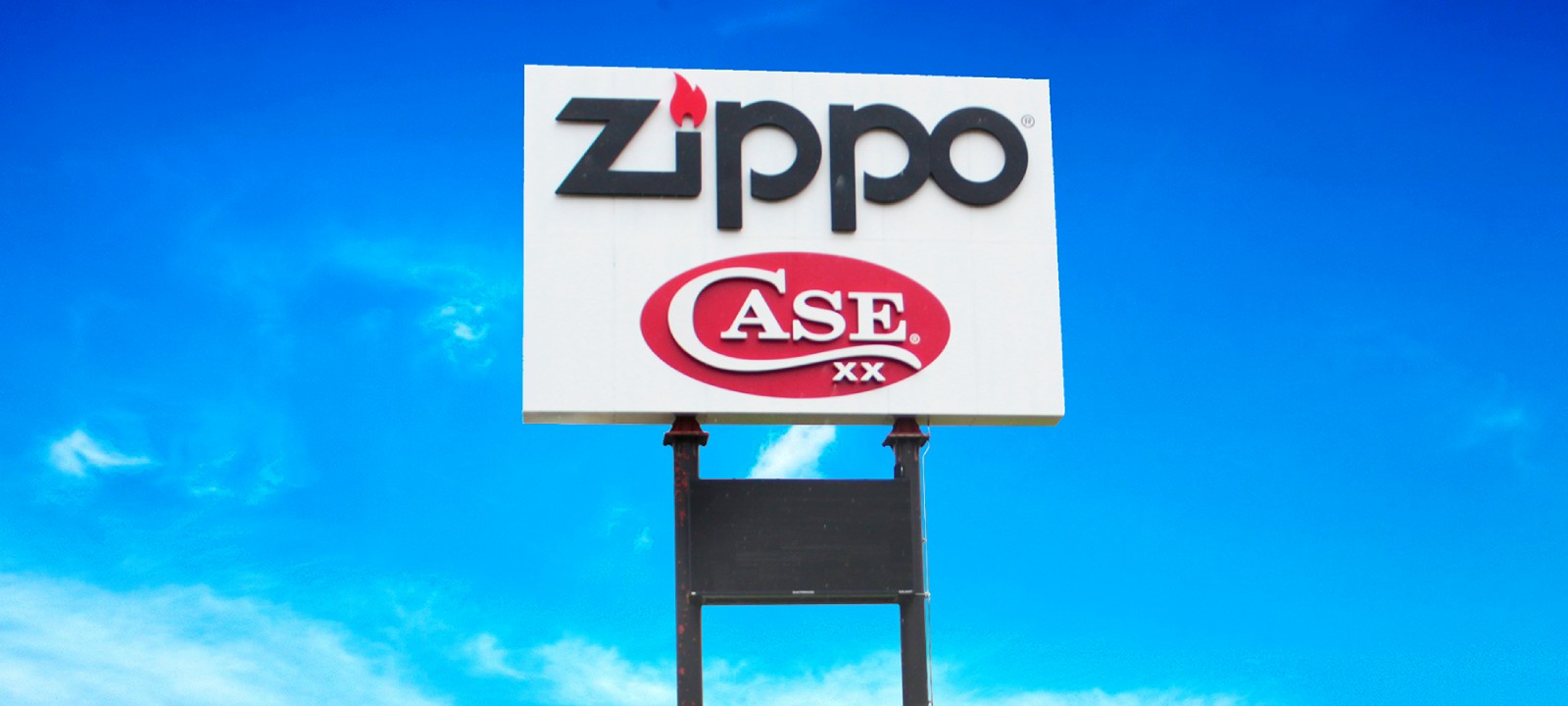
It's also the most adaptable sign on a site. One structure can identify a single brand or list every tenant in a plaza, and the face can be a cabinet, a set of channel letters or a digital display that changes daily. Pole signs are built to stand for decades, and when a brand changes, the face changes with it.
Flexlume has designed, built and installed pole signs since 1904, at single locations and across national rollouts.
Height & Size Options
Pole signs range from a few feet off the ground for an office park to 50 feet tall on the side of a major roadway.
Any Sign Type
Cabinet signs, channel letters or a full digital message center — any sign type can be mounted on a pole.
Dedicated or Shared
Ideal for one tenant, or a stacked multi-tenant panel for a strip center.
Built for the Long Term
Engineered foundations and finishes designed to weather the elements for years.
What Does a Pole Sign Cost?
Pole signs run anywhere from $8,000 to over $200,000. The spread is wide because the scope of work behind a pole sign varies more than the sign itself does.
Three variables account for most of the difference: the height of the structure, the display mounted on it and the conditions at the site. A 20 foot single tenant cabinet on an open lot and a 50 foot highway pylon carrying a digital display are different projects with different engineering, permitting and installation work behind them.
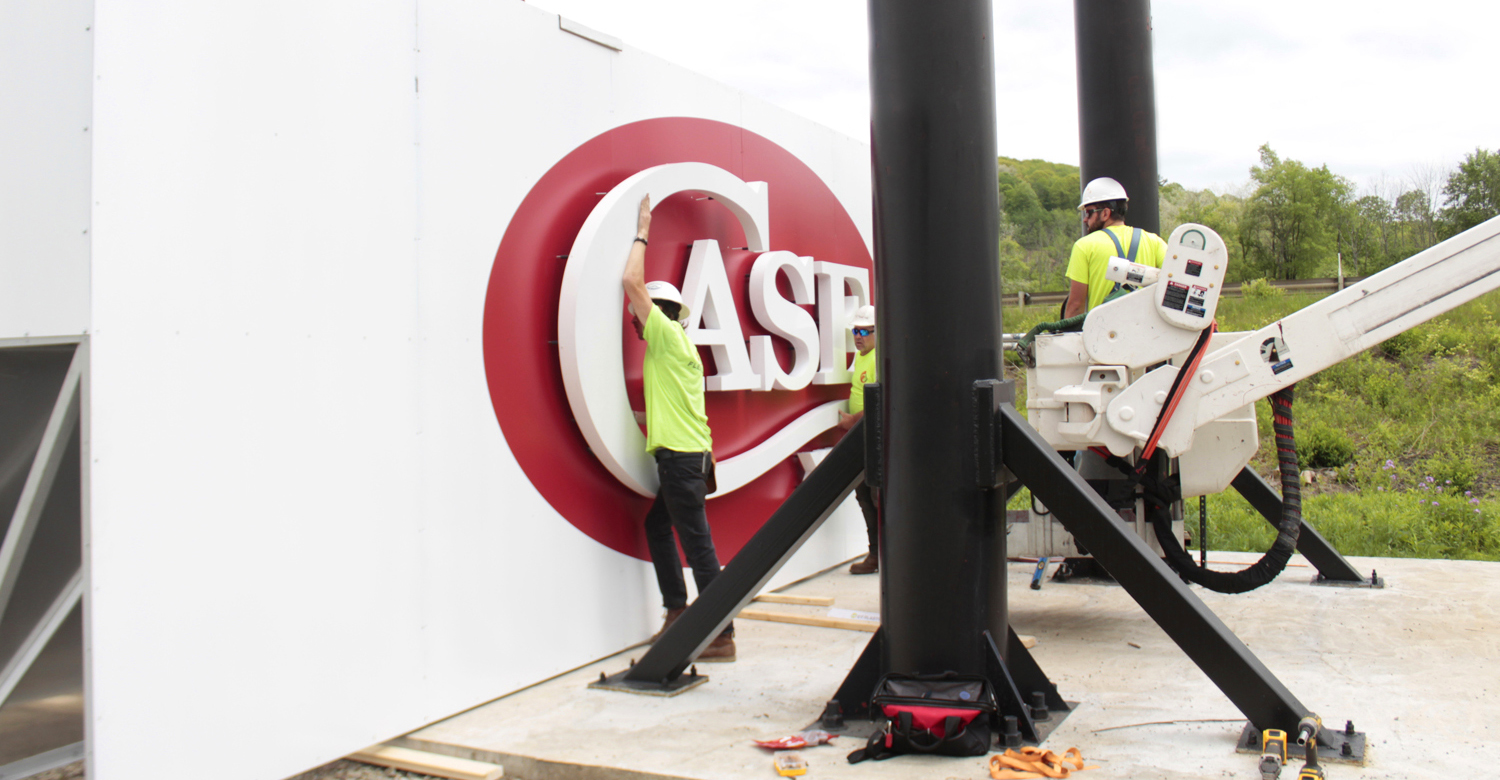
Height And Structure
Every added foot increases the pole diameter, the wall thickness and the concrete below grade, and the sign face has to grow with it to stay readable from the distance you're targeting.
What Goes On Top
What’s mounted on the pole can change the equation. A non-illuminated panel is the least expensive option, while a digital message center costs the most upfront.
Site Conditions
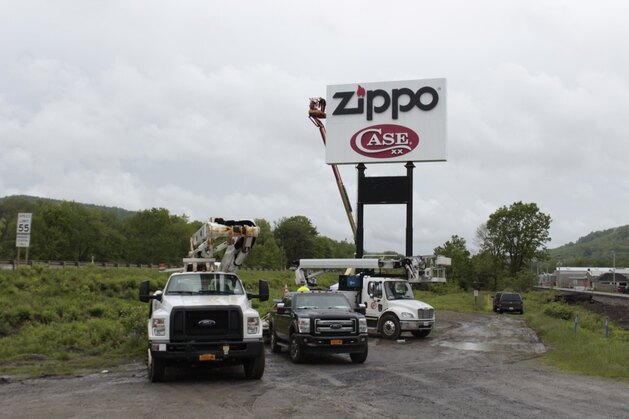
Rock, high water tables, buried utilities and limited crane access all add cost, and none of them surface until a site survey is complete.
What Goes Into a Pole Sign Project
Most sign companies fabricate, but fewer handle everything that has to happen before and after fabrication, which is where pole sign projects usually run into trouble. Flexlume owns the full sequence, which means problems surface on paper rather than in the field.
Code Research and Permitting
Height is set by local code, not by what a structure could support. Municipalities cap freestanding sign height and face area by district, and a growing number of commercial corridors prohibit new pole signs while grandfathering the ones already standing. We run the code check before design starts and handle the permit application, including variance requests where the sign a site needs exceeds what the district allows.
Structural Engineering
Every pole sign requires stamped structural engineering. Pole diameter, wall thickness, foundation depth and rebar schedule are calculated against local wind speed and soil conditions, then submitted with the permit package. Our engineers produce those drawings in house, so the design, the stamp and the permit package all move together.
Survey and Installation
Power has to reach the sign and a crane has to reach the foundation. Buried utilities, easements, drive aisle geometry and overhead lines all constrain where a pole can actually go, so we survey before we draw. Our own crews set the signs we fabricate, so nothing is handed to subcontractors.
Rolling Out Pole and Pylon Signs Across Multiple Locations
A pole sign project runs through six steps: site survey, code research, structural engineering, permitting, fabrication and installation. At one location that's a project plan. At 50 or 500 it's a program, and every site brings its own zoning district, permit office, utility locator and crane access problem. Split across a different local vendor in each market, that variation compounds.
The solution? One single partner across all of your sites. When you work with Flexlume, all six steps happen under one roof. We document the approved pole sign configurations for a brand, then match each site to the closest one rather than starting from a blank page every time a lease is signed. One survey standard, one set of engineered drawings adapted per site, one permit team tracking every application against one schedule. The same shop fabricates every structure, so brand standards hold from market to market.
Maintenance, Refacing and Rebrands
Pole and pylon signs often outlive the brands on them, which often means changing faces, owners or both. A sign that's been up for fifteen years needs its lighting checked and its faces inspected before a hairline crack turns into water inside the cabinet. A rebrand usually means refacing rather than rebuilding, which costs less than removing a foundation and keeps a grandfathered height intact. A location taken over with someone else's sign still on the pole needs the structure evaluated before anything new goes on top of it.
We service and repair pole signs, whether or not we built them to begin with.
Recent Pole and Pylon Projects
Pole and pylon projects across retail, hospitality and industrial sites.
Buffalo Rehab Group
Retail traffic and brand awareness on a shared commercial lot.
Buffalo Rehab Group
LaQuinta Batavia
Pulling highway traffic to a hotel set back from the exit.
LaQuinta Batavia
Big Lots
A retail cabinet sized to be read from two roads.
Big Lots
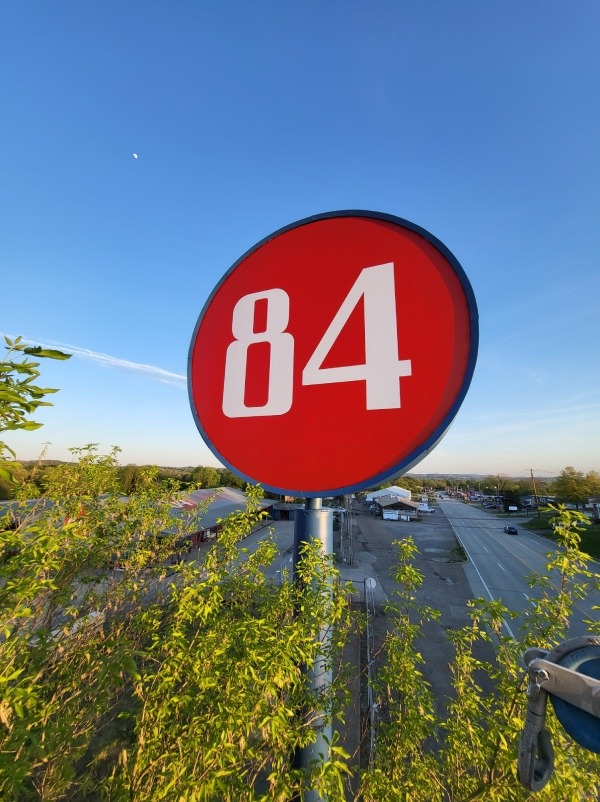
84 Lumber
A tall highway pylon carrying a national brand standard.
84 Lumber
Verizon
Wayfinding for a store inside a busy industrial zone.
Verizon
The Original
Pancake House
A digital face on a pylon, messaging changed from the office.
The Original
Pancake House
Frequently Asked Questions About Pole Signs
What is the difference between a pole sign and a pylon sign?
Pole signs typically use one or more visible support poles, while pylon signs often incorporate the supports into a larger enclosed structure. Both are freestanding signs designed for long-distance visibility.
How much do pole and pylon signs cost?
Pole and pylon signs can range from approximately $8,000 to more than $200,000 depending on height, size, display type, structural requirements and site conditions.
How tall can a pole or pylon sign be?
Maximum height depends on local sign codes, zoning and site conditions. Code requirements should be reviewed before the sign is designed.
Can an existing pole sign be refaced for a new brand?
Often, yes. If the existing structure is in good condition, new sign faces or branding can often be installed without replacing the entire structure.
Can a digital message center be added to a pylon sign?
Yes, depending on the existing structure, electrical capacity and local sign regulations. Flexlume can evaluate whether a digital display can be incorporated into a new or existing sign.
Speak with a National Signage Solution Expert Today
Whether you need one roadside sign or a standardized program across multiple locations, talk with Flexlume about your site, visibility requirements and project goals.
Your Ultimate Guide to Choosing the Right Signage
Channel letters, cabinets, monuments, pole and pylon structures, digital displays. Each one fits a different site, budget and code situation. The Ultimate Sign Guide walks through how to weigh them against each other, what each one costs, and how to tell one sign company from another before you hire one.